How a Car Battery Actually Works
Most vehicles use a 12-volt lead-acid battery to deliver a surge of current to the starter and to stabilize voltage while accessories run. The alternator recharges the battery while driving and supplies most electrical load when the engine runs. Cold cranking amps (CCA) rating describes starting power in cold conditions—important if you live where winter mornings are harsh.
Understanding this partnership helps you interpret symptoms: a battery can test “okay” at rest but fail under load if internal plates are degrading.
How Long Does a Car Battery Last?
Typical life is three to five years, but heat accelerates internal corrosion while deep discharge cycles (lights left on, lots of short trips) shorten life. Heavy infotainment loads and start-stop systems add stress. If your vehicle sits for weeks, a maintainer helps—but chronic neglect still ages batteries.
Signs Your Battery Is Failing
- Slow crank: the starter labors; lights dim during crank.
- Dim headlights at idle: charging or battery health may be borderline.
- Frequent jump starts: you are treating a symptom, not the disease.
- Swollen case: overcharging or heat damage—replace and verify charging voltage.
- Battery warning light: charging system fault possible—do not ignore.
- Age beyond three years in hot climates: proactive testing beats surprise parking-lot failures.
How to Test Your Battery
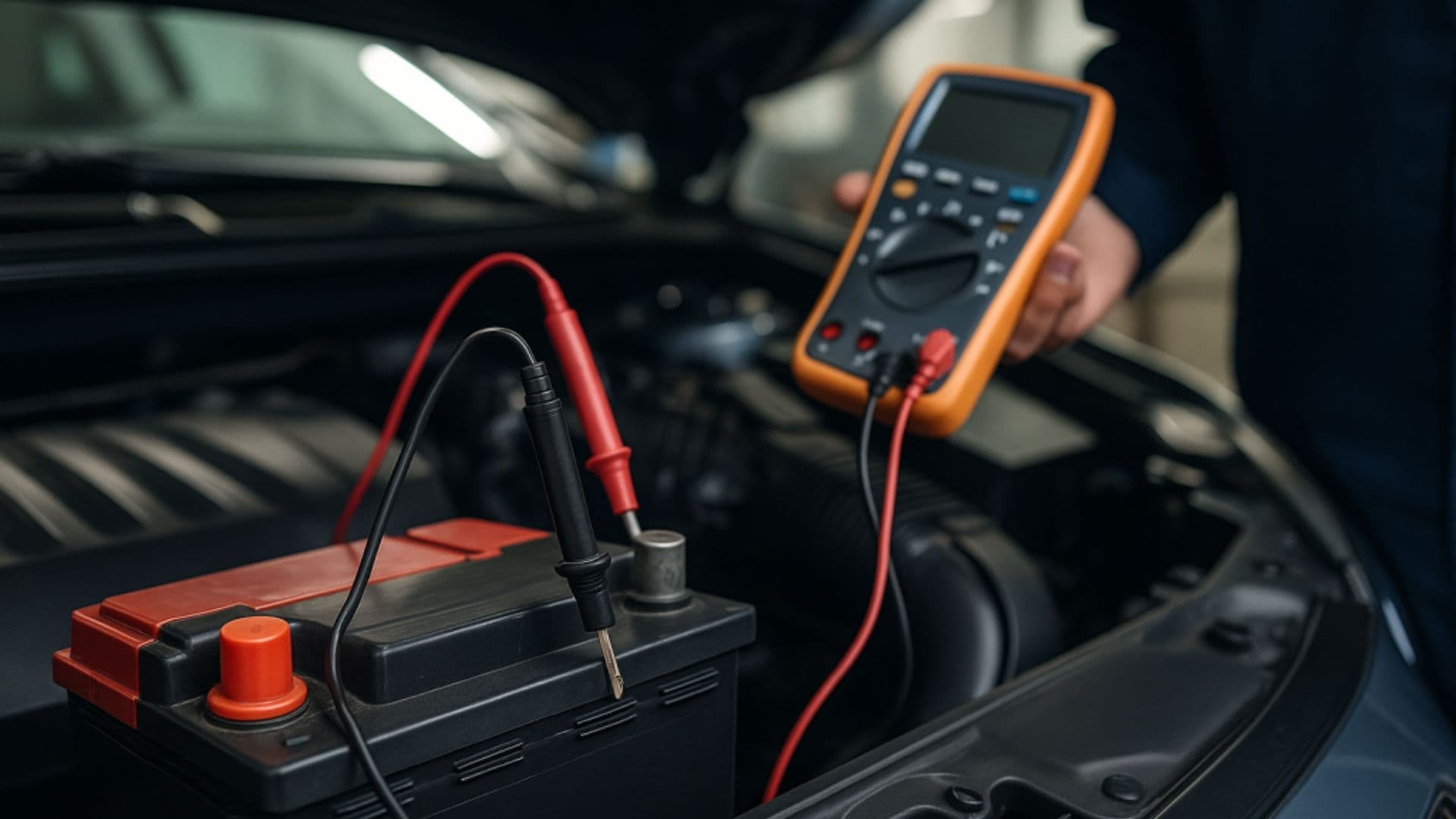
A resting voltage near 12.6 volts suggests a full charge; significantly lower suggests discharge or weakness. Load testers and conductance testers at parts stores provide better go/no-go data than voltage alone. Your technician should also verify alternator output and parasitic draw if unexplained drains occur.
Battery Maintenance Tips
Keep terminals clean and tight; corrosion increases resistance and mimics a bad battery. Avoid exclusively ultra-short trips that never let the alternator replenish energy. In winter, garaging helps; in summer, shade reduces under-hood heat soak. Turn accessories off before cranking when the battery is already marginal.
When to Replace vs Jump-Start
Jump-starting is fine for a one-off mistake (lights left on). If you need jumps weekly, you are risking alternator stress and being stranded when the jump fails in a bad location. Replace proactively after a verified bad load test, especially before road trips.
Getting Your Battery Replaced Without the Shop Visit
Uptime Crew can dispatch a technician with the correct group size and terminal layout for many vehicles, perform installation, reset BMS procedures where applicable, and test alternator output—so you are not guessing whether the battery was the only problem.
Parasitic Draw and Electrical Gremlins
If a new battery dies quickly, the culprit may be a trunk light stuck on, an aftermarket accessory, or a module failing to sleep. Technicians measure parasitic draw with controlled procedures so control modules are not damaged during testing. Document aftermarket alarms and dashcams because they are common draw sources.
Climate, Short Trips, and Alternator Health
Cold mornings increase crank load; heat increases fluid evaporation and under-hood temperatures. If your commute is five minutes each way, your battery may never fully recharge—combine that pattern with a weak alternator and failures cluster in winter. Longer weekly drives or a maintainer for seldom-used vehicles prevent sulfation surprises.
AGM, EFB, and Start-Stop Systems
Many modern vehicles with start-stop require AGM or EFB batteries—not generic flooded replacements. Mismatching types can cause premature failure and odd charging behavior. If your vehicle label specifies AGM, treat that as a requirement, not a suggestion. Technicians should register or calibrate the battery management system when the manufacturer expects it so alternator charging profiles match the new unit.
Final Thoughts
Batteries are consumables. Track age, test before travel seasons, and fix charging issues—not just the symptom. A little paranoia here prevents a lot of tow bills later.
Jump Packs, Boosters, and Lithium Options
Portable jump packs can save a trip but read the manual: incorrect polarity still damages electronics. If you carry a booster, recharge it monthly—dead packs fail when you need them. For diesel trucks, verify CCA ratings match engine requirements before relying on a compact pack.

