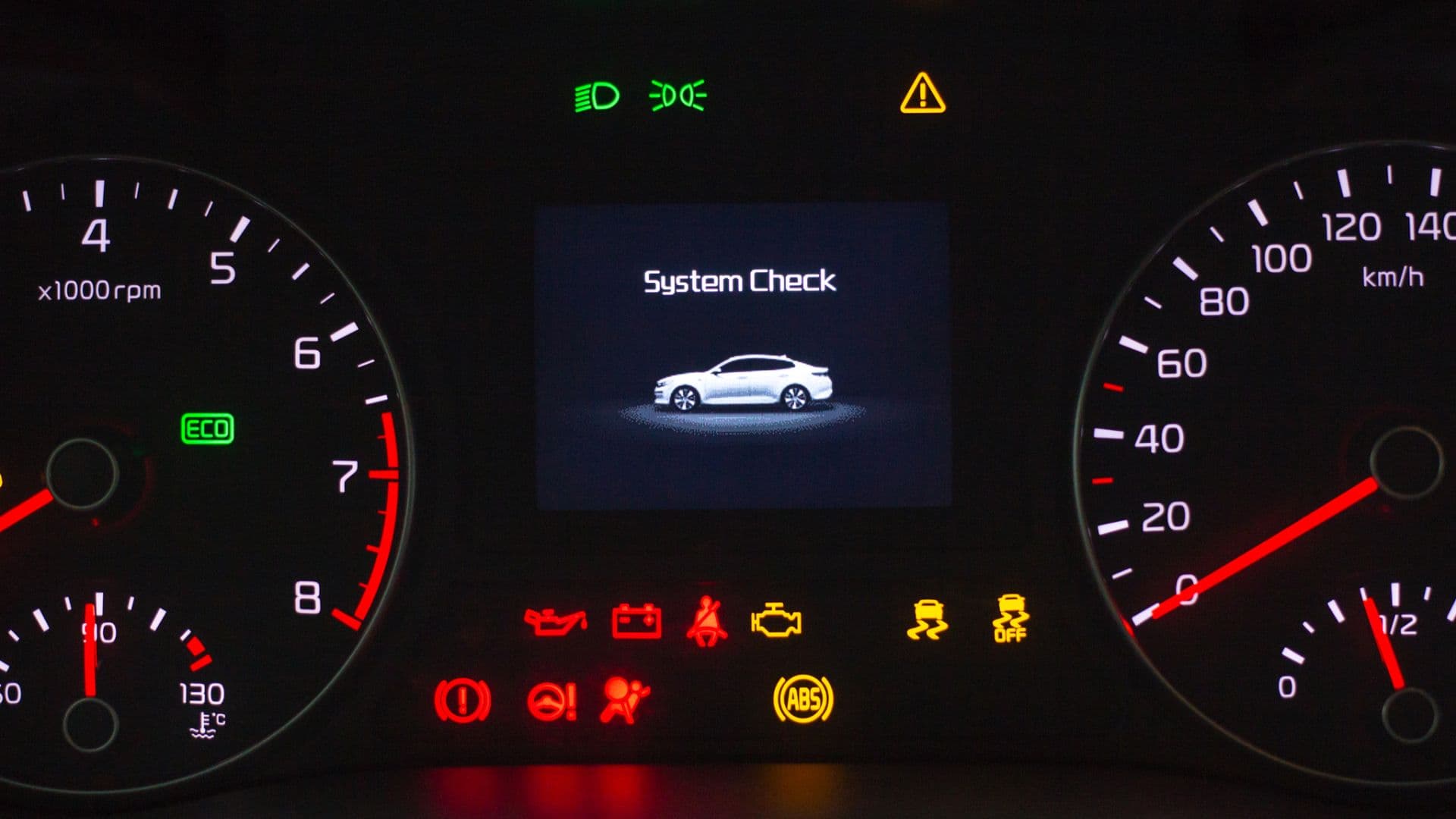
Why You Should Never Ignore a Warning Light
Dashboard warnings exist because modern vehicles monitor dozens of systems simultaneously. Some alerts protect expensive components—like catalysts and transmissions—while others protect you directly, especially brake and stability systems. Ignoring a light is not “being tough”; it is gambling with repair costs that compound when early intervention would have been cheaper and safer.
Even informational lights can hide nuance: a “service soon” message may precede limp mode by only a few drive cycles. Treat warnings as a prioritized to-do list, not decoration.
🔴 Stop Immediately — Critical Warnings
Oil pressure warning: This is not the same as “change oil soon.” Low oil pressure can mean internal damage or catastrophic loss of lubrication. If this illuminates red, pull over as soon as safely possible, shut off the engine, and check oil level only if you can do so without risk—otherwise call for service. Continuing to drive can destroy the engine in minutes.
Engine temperature (overheating): Steam, sweet coolant smell, or a rapid temperature climb means pull over and stop. Overheating warps heads, ruins gaskets, and can strand you. Do not open a hot cooling system cap.
Brake system warning: If combined with a soft pedal, extended stopping distance, or ABS/stability lights, treat as urgent. Brakes are your primary safety system; deferring is never worth it.
🟡 Service Soon — Important Warnings
Check engine light (steady): Indicates a fault the computer can detect—emissions, misfires, sensors, and more. Urgency rises if drivability changes, fuel smell appears, or the light flashes. Schedule diagnostics soon; prolonged misfires can damage the catalytic converter.
Battery/charging: Dimming lights, slow cranks, or voltage warnings suggest charging system problems. A failed alternator can leave you stranded after the battery depletes.
Transmission temperature: Pull over if instructed; heat kills transmissions quickly when fluid degrades or coolers clog.
TPMS (tire pressure): Underinflation increases blowout risk and hurts handling. Verify pressures cold and inspect for punctures.
🔵 Informational — No Immediate Danger
Low fuel, door-ajar reminders, seatbelt chimes, and “service due soon” oil-life indicators are important but rarely emergencies. Still, address them promptly—running out of fuel on a highway is dangerous, and open doors can drain batteries or trigger theft concerns.
The Check Engine Light Deserves Its Own Section
OBD-II standardized diagnostics, but one light covers hundreds of codes. The code is a starting map, not a parts order. A technician correlates codes with live data, tests components, and verifies repairs. If you ignore a steady light because “it drives fine,” you may be masking a slow leak, weak coil, or degrading sensor that will fail under load.
Uptime Crew can connect you with diagnostic professionals who bring scan tools and testing equipment to your location—ideal when you want answers without arranging a shop shuttle.
What to Do When a Warning Light Comes On
- Pause and note color and behavior (steady vs flashing).
- If red oil pressure, major brake warnings, or severe overheating: stop safely.
- If yellow check engine without major symptoms: reduce aggressive driving and schedule diagnostics.
- Capture photos of messages and note sounds, smells, and recent fueling or repairs.
- Book service with a clear symptom description to speed triage.
Closing
Your dashboard is a conversation. Learn the accent—red means stop, yellow means plan, blue/white often means information—and you will spend less money and less time on the shoulder. Pair that habit with a trusted service path like Uptime Crew when you need transparent help fast, and you will drive with more confidence every mile.
How Warning Lights Interact With Modern Safety Systems
Many vehicles integrate stability control, traction control, collision mitigation, and lane support with shared sensors. A single fault can illuminate multiple indicators because the network defaults to conservative behavior when confidence drops. That is why you should avoid dismissing “just a sensor” without verification—those sensors often feed safety-critical decisions at highway speeds.
If you recently had glass replaced, suspension work, or a battery replacement, mention it during diagnostics. Calibration and voltage events can trigger warnings that look catastrophic but are resolved with a procedure rather than a major repair. A careful technician distinguishes network noise from mechanical failure.
Documentation Habits That Save Money
Keep a dated log of lights, sounds, and weather conditions. Intermittent faults are expensive because time equals money in a bay; your notes reduce guesswork. Photos of the cluster when the message appears can also help confirm wording for service writers. When you book through Uptime Crew, uploading that context helps mobile technicians bring the right tools on the first visit—another way transparency reduces cost.